How We Test
Every lot is analyzed by an independent third-party laboratory before release — not self-reported. Here is exactly what we measure, the methods we use, and the documentation you receive.
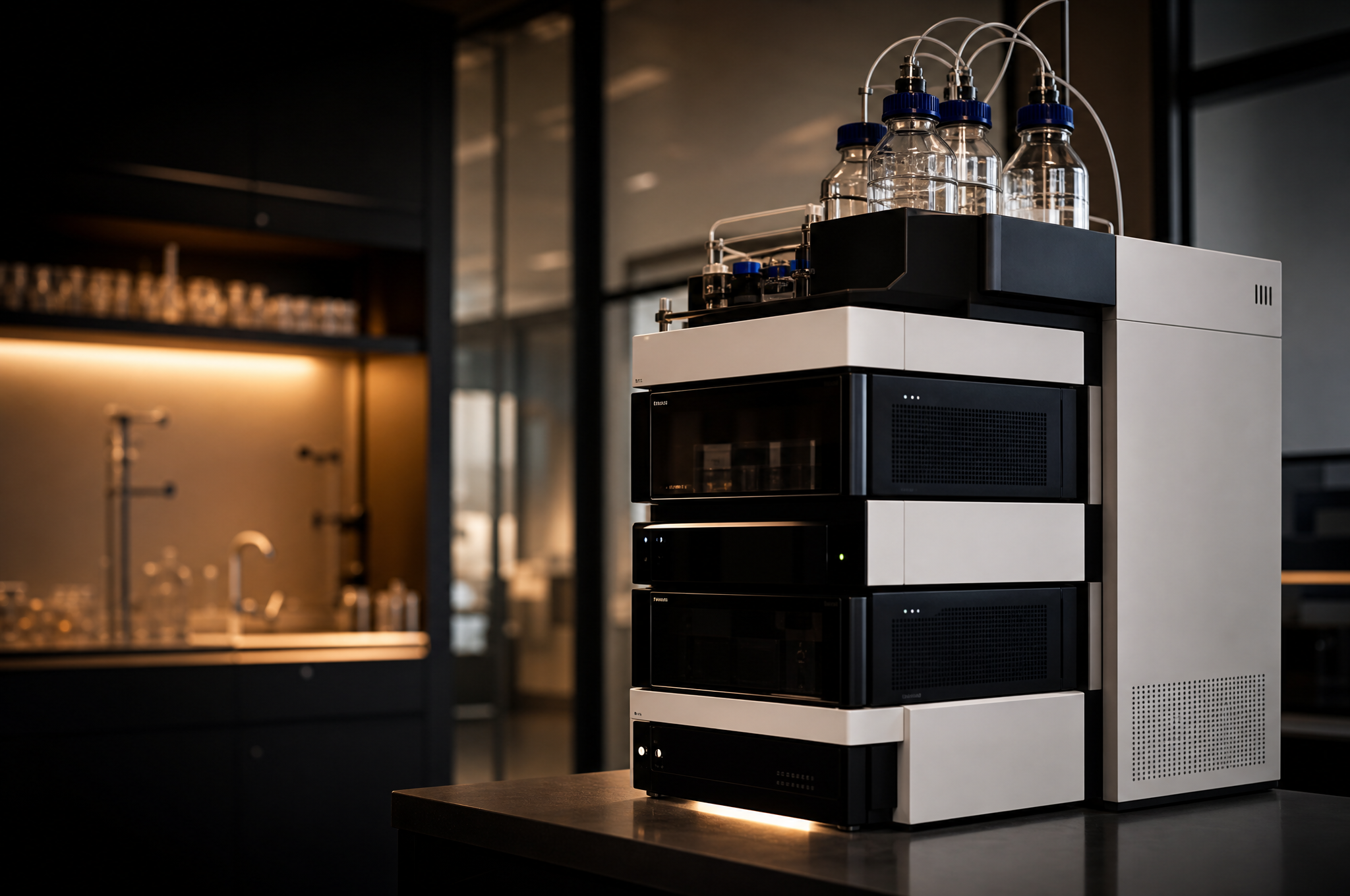
01The Standard
Every Ethos Bio production lot is analyzed by an independent third-party laboratory — MZ Biolabs, an analytical lab in Arizona — before it is released for sale. Testing is separated from production, so identity and purity are confirmed by a third party, not self-reported by the seller.
Every lot is analyzed on a five-point panel: reverse-phase HPLC purity (with net peptide quantity), mass-spectrometry identity, endotoxin, heavy metals, and sterility. A batch-specific Certificate of Analysis corresponding to the exact lot you receive ships with every order and is mirrored to your researcher account.
Independent · Batch-specific · Documented
02The Analytical Panel
Each method answers a different question about the material. Purity tells you how much of the vial is the target compound; identity confirms it is actually that compound; the safety assays screen for contaminants that purity alone will not reveal.
Reverse-Phase HPLC
Separates the sample by hydrophobicity and integrates the chromatogram to quantify the target peak against impurities — and measures net peptide quantity per vial, distinguishing peptide from bound salts and water.
Mass Spectrometry
Measures the molecular mass and compares the observed monoisotopic mass to the theoretical mass of the target sequence, confirming the molecule is what the label says.
Endotoxin (LAL)
Screens for bacterial endotoxin using the Limulus Amebocyte Lysate assay — a contaminant HPLC purity will not detect but that matters for sensitive research models.
Heavy Metals
Screens for elemental contaminants — lead, arsenic, cadmium, mercury — by ICP-MS against recognized elemental-impurity limits.
Sterility / Bioburden
Assesses microbial load to complement endotoxin screening for a fuller contamination picture on every released lot.
Appearance and residual-water (Karl Fischer) checks are recorded on lots where relevant.
03From Lot to Your Bench
Documentation only matters if it traces to the exact vial in your hand. Every lot follows the same chain:
- Production lot assigned. Each batch receives a unique lot number that follows the material through every step.
- Independent sampling. A sample from the finished lot is submitted to MZ Biolabs for analysis, separate from production.
- Five-point analysis. The lab runs the full five-point panel against defined acceptance criteria.
- Release decision. Only lots that meet specification are released. Off-spec material is not sold.
- Batch-specific COA issued. The certificate references that lot number and the methods and results for that exact batch.
- Ships with your order & mirrored to your account. You receive the COA for the lot you were sent — cold-chain compounds ship refrigerated and temperature-logged.
04How to Read Our COA
A Certificate of Analysis is only as useful as the questions it answers. On an Ethos Bio COA, look for:
- Named laboratory. The analysis is attributed to a specific independent lab (MZ Biolabs), not "in-house" or anonymous.
- Specific lot / batch reference. The certificate ties to the production lot you received — not a single generic document reused across every order.
- Stated methods. RP-HPLC for purity and mass spectrometry for identity are named, so results are interpretable and reproducible.
- Acceptance criteria. Results are reported against a defined specification (e.g. ≥99% purity), not shown without context.
- Purity and identity together. A purity number alone is not enough — identity confirms the molecule is what the label says.
Representative certificates on the site show the exact format you will receive. As new independent lot reports are issued by MZ Biolabs, they are published per compound and per batch on the certificate pages.
05What to Demand From Any Supplier
Use this checklist for any research-compound vendor, not only Ethos Bio. A supplier that cannot meet these is asking you to take purity on faith:
- A batch-specific COA tied to the lot you receive — not one undated certificate reused for every order.
- A named, independent laboratory — testing separated from the seller, ideally verifiable.
- Both purity and identity data — HPLC and mass spectrometry, not one without the other.
- Stated acceptance criteria — results reported against a defined specification.
- Lot traceability — a path from the vial's lot number back to its report.
- Documentation up front — not hidden behind an "email us for a COA" request.
Transparency is a standard, not a favor.
06FAQ
How are Ethos Bio research compounds tested?
Every lot is analyzed by an independent third-party laboratory (MZ Biolabs, Arizona) on a five-point panel: reverse-phase HPLC purity (with net peptide quantity), mass-spectrometry identity, endotoxin (LAL), heavy metals (ICP-MS), and sterility or bioburden. A batch-specific Certificate of Analysis is provided with every order.
What is a Certificate of Analysis (COA)?
A lab-issued document reporting the measured identity and purity of a specific production lot. A meaningful COA names the testing laboratory, references a specific lot number, states the methods used, and reports results against defined acceptance criteria. Ethos Bio provides a batch-specific COA for every order rather than a single generic document.
Who tests Ethos Bio compounds?
Analysis is performed by MZ Biolabs, an independent analytical laboratory in Arizona. Testing is independent of production, so purity and identity are confirmed by a third party rather than self-reported by the seller.
What purity standard does Ethos Bio hold?
The release specification is ≥99% purity by reverse-phase HPLC, with identity independently confirmed by mass spectrometry. Any lot that does not meet specification is not released.
Does every order include testing documentation?
Yes. A batch-specific Certificate of Analysis corresponding to the lot shipped is provided with every order, and results are mirrored to the researcher account. Compounds requiring cold-chain handling ship under refrigerated, temperature-logged conditions.
What should I demand from any research peptide supplier?
Require a batch-specific COA (not a generic one), a named independent testing laboratory, both HPLC purity and mass-spectrometry identity data, stated acceptance criteria, and lot traceability from the vial back to the report. Suppliers that only offer a single undated COA, or that hide testing behind an email request, do not meet a defensible standard.